Map the role families
Clinical, administrative and operational work serve different needs. Compare responsibilities and entry paths without turning the map into a hierarchy.
Read the career map ↗ROLES / WORK / DEVELOPMENT
A healthcare-work reading room
THE WORK BEHIND THE JOB TITLE
A career path is more than a title. Look at the setting, the daily work and the evidence behind a decision. An independent reading room for people exploring MedStar Health roles and workplace resources.
Independent of MedStar Health. No employer affiliation, account access, credential collection or official employee support.
Our public myHR context guide explains the difference between an employee-resource reference, a job application and patient services. This publication is a place to understand the question; official MedStar channels handle individual employment and account matters.
FOUR LONGER READS
Original comparison methods, concrete questions and clearly bounded public sources. There is more than one useful way into a healthcare career.
Clinical, administrative and operational work serve different needs. Compare responsibilities and entry paths without turning the map into a hierarchy.
Read the career map ↗Student opportunities, new-graduate entry and experienced roles need different evidence. A broad program description cannot settle every requirement.
Understand the pathways ↗Hospitals, ambulatory sites and home-based services organize work differently. Use concrete setting questions instead of assumptions about a typical day.
Compare working contexts ↗Separate duties, required criteria, preferred skills, stated terms and unanswered questions before comparing two opportunities.
Build an evidence ledger ↗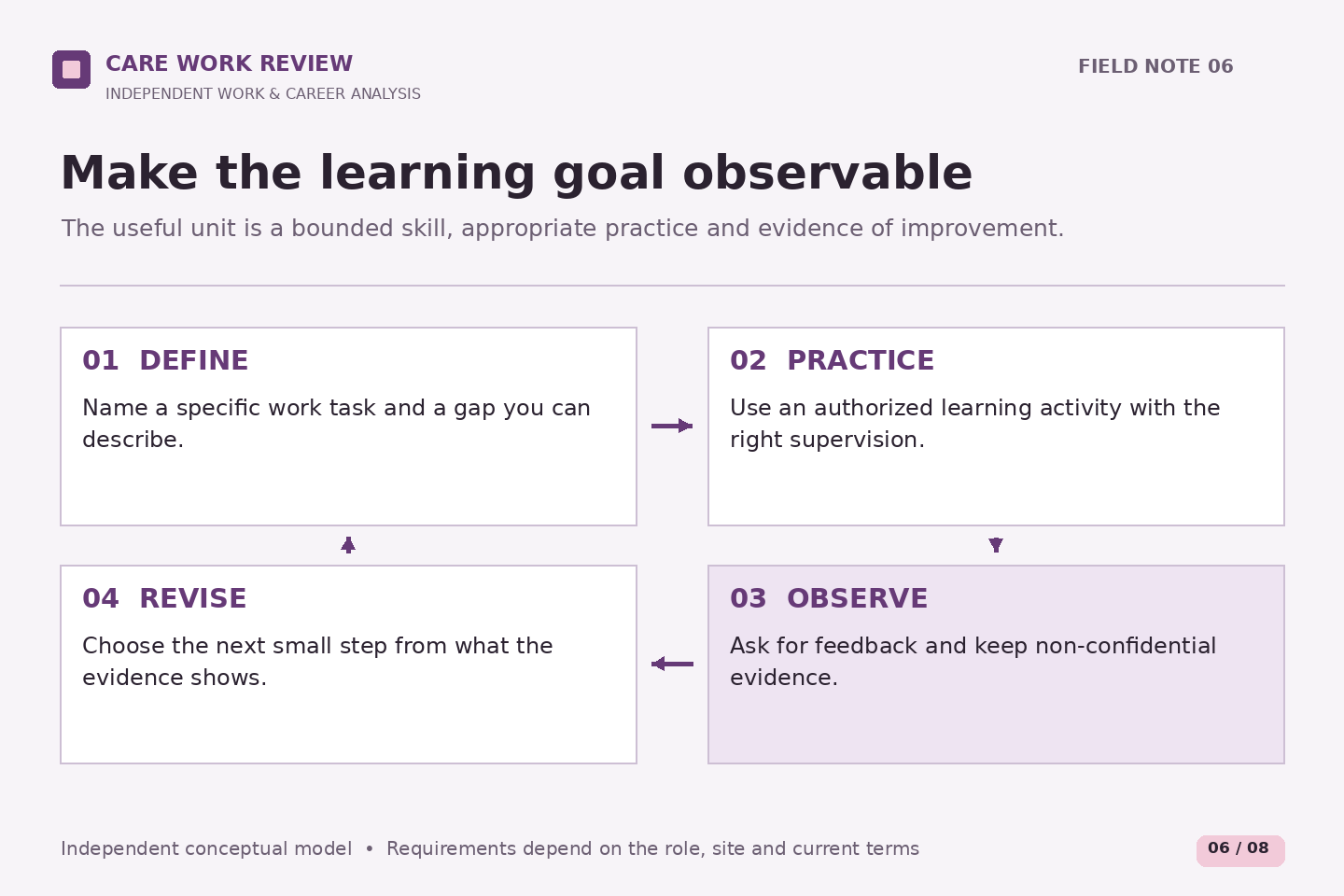
A DEVELOPMENT NOTE
A course is an activity. A more useful development plan names the skill, the appropriate practice and the evidence that would show progress.
Build a small learning plan →WORK & ROLE EXPLORER
Choose the work you want to understand and the kind of evidence you need. Get a source-based preparation brief with a practical next step and a clear limit.
Explore a role, compare published evidence, or prepare a conversation. This is an independent reading aid, not a job-matching service or employee help desk.
Public sources checked October 1, 2026. No names, IDs, health details, pay data or uploads. Choices stay in this page’s memory; no tool cookies, storage, URL parameters or network requests. Your browser may restore form state independently.
THE READING ROOM
From early career research to a first month of work. Each guide has its own practical question, public sources and limits.
20 articles
Career paths
A practical map of clinical, administrative, and technical work, with a decision method for comparing MedStar Health career directions.
Read the article : Choose a healthcare role by its work, not its titleCareer paths
Student work, graduation, licensure, residency, and experienced practice are different milestones. Build a plan that keeps their requirements visible.
Read the article : Separate the milestones in a nursing career planCareer paths
Imaging, laboratory, respiratory, rehabilitation, and medical-assisting work require different questions about preparation and daily responsibilities.
Read the article : Compare allied health paths without flattening the differencesCareer paths
Office support, specialist records work, and management are different career directions. Compare the work and build honest transferable evidence.
Read the article : Find the responsibility inside an administrative jobCareer paths
Compare support, informatics, information work, and equipment maintenance through the problems they address and the decisions they are authorized to make.
Read the article : Read healthcare technology work by its operating boundaryCareer paths
Organize your next month around requirements, evidence, and useful questions, rather than the number of applications you can submit.
Read the article : Build an early-career plan that survives a changing vacancy listDevelopment
Prepare an exploratory conversation about healthcare work with a clear purpose, bounded questions, and a useful next step.
Read the article : Ask a career question that someone can actually answerWorking life
Hospital, outpatient, home and systemwide work create different practical questions. Compare the shape of the day before choosing a setting.
Read the article : Choose a setting by the workday it createsApplications & decisions
Use a practical vacancy rubric to separate entry requirements, work conditions, compensation language and questions that still need an answer.
Read the article : Read a vacancy as a set of separate commitmentsWorking life
Day, night, full time and PRN leave important questions open. Turn a shift description into a realistic calendar before comparing roles.
Read the article : Read the whole pattern behind a shift labelApplications & decisions
Connect the vacancy to accurate examples, credential status and a consistent work history without exposing private patient or workplace information.
Read the article : Build an application around evidence you can explainApplications & decisions
Prepare role-specific examples and a short set of practical questions, then distinguish what the conversation clarified from what still needs verification.
Read the article : Prepare an interview that answers both sides of the decisionDevelopment
Choose a work-relevant learning goal, check the route and support, and define what will show progress before committing time or money.
Read the article : Turn career learning into a small, testable planWork resources
Move from a public benefits overview to the current documents and role-specific questions that can support an employment decision.
Read the article : Ask benefits questions in the order that mattersApplications & decisions
A stronger offer comparison separates confirmed terms, personal priorities, and unresolved conditions before the deadline.
Read the article : Compare the offer you can verifyDevelopment
Turn early questions into a practical plan for expectations, supervised practice, feedback, and dependable follow-through.
Read the article : Make the first month a learning planWork resources
Read public references to myHR with the right expectations, and separate a published route from an answer about your own work record.
Read the article : What a public myHR reference can tell youWork resources
A clear question, a verified official destination, and a defined finish are more useful than a long list of employee-resource links.
Read the article : Send the question to the right placeWork resources
A small, careful record of your own employment documents and decisions can make reviews and corrections easier without copying sensitive workplace material.
Read the article : Keep a work record you can actually useWorking life
Use a change-impact sheet to clarify the effective date, test recurring commitments, and distinguish a proposal from an approved arrangement.
Read the article : Test the whole week before a schedule changesTHE EDITORIAL STANDARD
Care Work Review is an independent publication about healthcare work and public MedStar Health resources. We explain how to compare information and prepare questions. We do not decide anyone’s employment, benefits or professional eligibility.
Our articles were prepared with automated assistance. They do not claim private-system experience, medical review or interviews with employees. The responsible publisher is morales.